


Homer bidding farewell to his wife, Odysseus bound to the mast, Penelope at the loom, Achilles dragging Hector’s body round the walls of Troy – scenes from Homer have been portrayed in every generation. Chapman’s translations are argued to be two of the liveliest and readable.
Translated by George Chapman, with Introductions by Jan Parker.
Hector bidding farewell to his wife and baby son, Odysseus bound to the mast listening to the Sirens, Penelope at the loom, Achilles dragging Hector’s body round the walls of Troy – scenes from Homer have been reportrayed in every generation. The questions about mortality and identity that Homer’s heroes ask, the bonds of love, respect and fellowship that motivate them, have gripped audiences for three millennia.
Chapman’s Iliad and Odyssey are great English epic poems, but they are also two of the liveliest and readable translations of Homer. Chapman’s freshness makes the everyday world of nature and the craftsman as vivid as the battlefield and Mount Olympus. His poetry is driven by the excitement of the Renaissance discovery of classical civilisation as at once vital and distant, and is enriched by the perspectives of humanist thought.

Part of Penguins beautiful hardback Clothbound Classics series, designed by the award-winning Coralie Bickford-Smith, these delectable and collectible editions are bound in high-quality colourful, tactile cloth with foil stamped into the design. Charlotte Brontes first published novel, Jane Eyre was immediately recognised as a work of genius when it appeared in 1847. Orphaned into the household of her Aunt Reed at Gateshead, subject to the cruel regime at Lowood charity school, Jane Eyre nonetheless emerges unbroken in spirit and integrity. How she takes up the post of governess at Thornfield Hall, meets and loves Mr Rochester and discovers the impediment to their lawful marriage are elements in a story that transcends melodrama to portray a womans passionate search for a wider and richer life than that traditionally accorded to her sex in Victorian society.

Ranked as one of the greatest and most perennially popular works of English fiction, this title portrays the heroine, who although poor and of plain appearance, possesses an indomitable spirit, a sharp wit and great courage. She is forced to battle against the exigencies of a cruel guardian, a harsh employer and a rigid social order.
Introduction and Notes by Dr Sally Minogue, Canterbury Christ Church University College.
Jane Eyre ranks as one of the greatest and most perennially popular works of English fiction. Although the poor but plucky heroine is outwardly of plain appearance, she possesses an indomitable spirit, a sharp wit and great courage.
She is forced to battle against the exigencies of a cruel guardian, a harsh employer and a rigid social order. All of which circumscribe her life and position when she becomes governess to the daughter of the mysterious, sardonic and attractive Mr Rochester.
However, there is great kindness and warmth in this epic love story, which is set against the magnificent backdrop of the Yorkshire moors. Ultimately the grand passion of Jane and Rochester is called upon to survive cruel revelation, loss and reunion, only to be confronted with tragedy.

For fans of all ages, legendary British writer Rudyard Kipling’s complete collection of enchanting fables set in India-the basis of the beloved animated Disney film and a modern cinematic retelling from director Jon Favreau-now available in a deluxe four-color illustrated collectible edition. The Jungle Book features stunning artwork and nine 3-D interactive elements crafted by MinaLima Design, the award-winning design studio behind the graphics for the Harry Potter film franchise and the illustrated classic Peter Pan. Since its publication in 1894, Rudyard Kipling’s beloved masterpiece The Jungle Book has been celebrated by generations of readers. Composed of seven tales, each one accompanied by a poem, The Jungle Book is a coming of age fantasy that introduces a lush, colorful world full of adventure and danger. The first three tales include some of the most charming and unforgettable characters in literature-the man-cub Mowgli, the black panther Bagheera, the wise brown bear Baloo, the ruthless tiger Shere Khan, and the hypnotic python Kaa. The other four tales each tell the story of a different animal, such as the travels of the white seal Kotick; the battle between the courageous mongoose Rikki-Tikki-Tavi and the deadly cobra Nag; Toomai and the elephant dance; and the camp animals of the queen’s guard. The second volume in Harper Design’s newest series of deluxe reimagined children’s classics, this beautiful unabridged edition takes readers deep into the heart of the Indian jungle with specially commissioned four-color illustrations and nine exclusive interactive features that will delight readers, including a map of the lost Indian city where Mowgli is taken by the monkeys; a trifold detailing the Laws of the Jungle; a spinning dial of the elephant dance; and a map of Kotick’s route to find a new home. Beautifully designed, this keepsake illustrated edition will be treasured by readers of all ages.

A tale of injustice, heroism and love that follows the fortunes of Jean Valjean, an escaped convict determined to put his criminal past behind him. It is not simply for himself that Valjean must stay free, however, for he has sworn to protect the baby daughter of Fantine (Anne Hathaway), driven to prostitution by poverty.
Victor Hugo’s tale of injustice, heroism and love follows the fortunes of Jean Valjean, an escaped convict determined to put his criminal past behind him. But his attempts to become a respected member of the community are constantly put under threat: by his own conscience, when, owing to a case of mistaken identity, another man is arrested in his place; and by the relentless investigations of the dogged Inspector Javert. It is not simply for himself that Valjean must stay free, however, for he has sworn to protect the baby daughter of Fantine, driven to prostitution by poverty.
Norman Denny’s lively English translation is accompanied by an introduction discussing Hugo’s political and artistic aims in writing Les Misérables.
Victor Hugo (1802-85) wrote volumes of criticism, dramas, satirical verse and political journalism but is best remembered for his novels, especially Notre-Dame de Paris (also known as The Hunchback of Notre-Dame) and Les Misérables, which was adapted into one of the most successful musicals of all time.
‘All human life is here’
Cameron Mackintosh, producer of the musical Les Misérables
‘One of the half-dozen greatest novels of the world’
Upton Sinclair
‘A great writer – inventive, witty, sly, innovatory’
A. S. Byatt, author of Possession
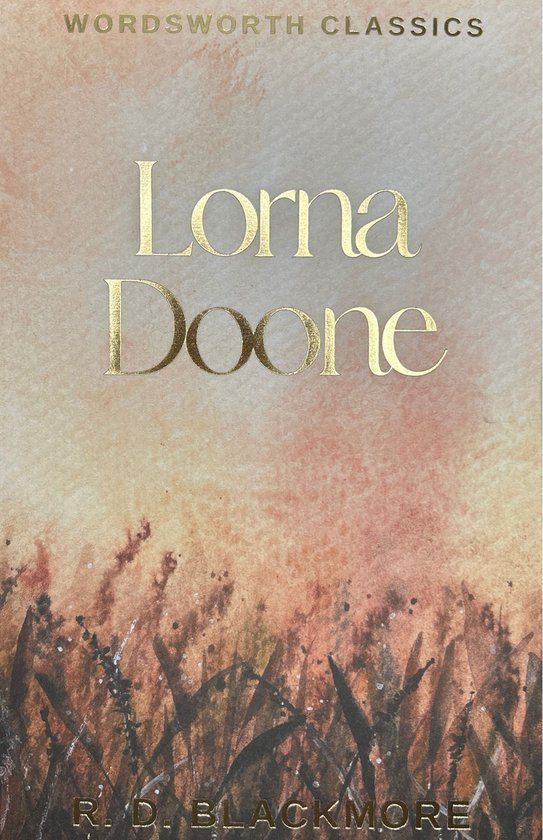
An historical novel of high adventure set in the South West of England during the turbulent time of Monmouth’s rebellion (1685). It is also a love story told through the life of the young farmer John Ridd, as he grows to manhood determined to right the wrongs in his land, and to win the heart and hand of the beautiful Lorna Doone.
With an Introduction and Notes by Dr Pamela Knights, Department of English Studies, Durham University.
Lorna Doone, a Romance of Exmoor is an historical novel of high adventure set in the South West of England during the turbulent time of Monmouth’s rebellion (1685).
It is also a moving love story told through the life of the young farmer John Ridd, as he grows to manhood determined to right the wrongs in his land, and to win the heart and hand of the beautiful Lorna Doone.
Continuously in print since its first publication in 1869, Lorna Doone has remained perennially popular with a wide readership ever since.

Features Jane Austen’s brilliant, hilarious – and often outrageous – early stories, sketches and pieces of nonsense. This edition includes all of Austen’s juvenilia, including her ‘History of England’, and the novella ‘Lady Susan’, in which the anti-heroine schemes and cheats her way through high society.
Jane Austen’s brilliant, hilarious – and often outrageous – early stories, sketches and pieces of nonsense, in a beautiful Penguin Classics clothbound edition.
Jane Austen’s earliest writing dates from when she was just eleven years, and already shows the hallmarks of her mature work: wit, acute insight into human folly, and a preoccupation with manners, morals and money. But they are also a product of the eighteenth century she grew up in – dark, grotesque, often surprisingly bawdy, and a far cry from the polished, sparkling novels of manners for which she became famous. Drunken heroines, babies who bite off their mother’s fingers, and a letter-writer who has murdered her whole family all feature in these very funny pieces. This edition includes all of Austen’s juvenilia, including her ‘History of England’ – written by ‘a partial, prejudiced, and ignorant Historian’ – and the novella ‘Lady Susan’, in which the anti-heroine schemes and cheats her way through high society. Taken together, they offer a fascinating – and often surprising – insight into the early Austen.
This major new edition is the first time Austen’s juvenilia has appeared in Penguin Classics. Edited by Christine Alexander, it includes an introduction, notes and other useful editorial materials.
Jane Austen was born on 16 December 1775 at Steventon, near Basingstoke, the seventh child of the rector of the parish. In her youth she wrote many burlesques, parodies and other stories, including a short epistolary novel, Lady Susan. On her father’s retirement in 1801, the family moved to Bath, and subsequently to Chawton in Hampshire. The novels published in Austen’s lifetime include Sense and Sensibility(1811), Pride and Prejudice (1813), Mansfield Park (1814) and Emma (1816). Persuasion was written in a race against failing health in 1815-16, and was published, together with Northanger Abbey, posthumously in 1818. Austen died in Winchester on 18 July 1817.
Christine Alexander is Scientia Professor of English at the University of New South Wales and general editor of the Juvenilia Press. She has published extensively on the Brontës and has co-edited the first book on literary juvenilia, The Child Writer from Austen to Woolf (2005).
‘Spirited, easy, full of fun, verging with freedom upon sheer nonsense…At fifteen she had few illusions about other people and none about herself’ – Virginia Woolf’
[Her] inspiration was the inspiration of Gargantua and of Pickwick; it was the gigantic inspiration of laughter’ – G. K. Chesterton

Encompasses witchcraft, bloody murder, and ghostly apparitions. This work tells the tragedy of a good, brave and honourable man turned into the personification of evil by the workings of unreasonable ambition.
Edited, introduced and annotated by Cedric Watts, M.A., Ph.D., Emeritus Professor of English, University of Sussex.
Shakespeare’s Macbeth is one of the greatest tragic dramas the world has known. Macbeth himself, a brave warrior, is fatally impelled by supernatural forces, by his proud wife, and by his own burgeoning ambition. As he embarks on his murderous course to gain and retain the crown of Scotland, we see the appalling emotional and psychological effects on both Lady Macbeth and himself. The cruel ironies of their destiny are conveyed in poetry of unsurpassed power. In the theatre, this tragedy remains perennially engrossing.

Adultery is not a typical Jane Austen theme, but when it disturbs the relatively peaceful household at Mansfield Park, it has quite unexpected results. The heroine, Fanny Price, has to struggle to cope with the results, re-examining her feelings while enduring the amorality, old-fashioned indifference and priggish disapproval of those around her.
Introduction and Notes by Dr Ian Littlewood, University of Sussex.
Adultery is not a typical Jane Austen theme, but when it disturbs the relatively peaceful household at Mansfield Park, it has quite unexpected results.
The diffident and much put-upon heroine Fanny Price has to struggle to cope with the results, re-examining her own feelings while enduring the cheerful amorality, old-fashioned indifference and priggish disapproval of those around her.

Set in the heart of the Wessex, this book charts the rise and downfall of a single ‘man of character’. It’s moving and contrived narrative is Shakespearian in its force, and features some of the author’s episodes and passages of description.
With an Introduction and Notes by Michael Irwin, Professor of English Literature, University of Kent at Canterbury.
None of the great Victorian novels is more vivid and readable than The Mayor of Casterbridge. Set in the heart of Hardy’s Wessex, the ‘partly real, partly dream country’ he founded on his native Dorset, it charts the rise and self-induced downfall of a single ‘man of character’.
The fast-moving and ingeniously contrived narrative is Shakespearian in its tragic force, and features some of the author’s most striking episodes and brilliant passages of description.

During an eventful season at Bath, young, naive Catherine Morland experiences the joys of fashionable society for the first time. She is delighted with her new acquaintances: flirtatious Isabella, who shares Catherine’s love of Gothic romance and horror, and sophisticated Henry and Eleanor Tilney, who invite her to their father’s mysterious house.
Part of Penguin’s beautiful hardback Clothbound Classics series, designed by the award-winning Coralie Bickford-Smith, these delectable and collectible editions are bound in high-quality colourful, tactile cloth with foil stamped into the design.
During an eventful season at Bath, young, naïve Catherine Morland experiences the joys of fashionable society for the first time. She is delighted with her new acquaintances: flirtatious Isabella, who shares Catherine’s love of Gothic romance and horror, and sophisticated Henry and Eleanor Tilney, who invite her to their father’s mysterious house, Northanger Abbey. There, her imagination influenced by novels of sensation and intrigue, Catherine imagines terrible crimes committed by General Tilney. With its broad comedy and irrepressible heroine, this is the most youthful and and optimistic of Jane Austen’s works.

The story of a young girl, Catherine Morland who leaves her sheltered, rural home to enter the busy, sophisticated world of Bath in the late 1790s.
Introduction and Notes by David Blair, University of Kent.
Northanger Abbey tells the story of a young girl, Catherine Morland who leaves her sheltered, rural home to enter the busy, sophisticated world of Bath in the late 1790s. Austen observes with insight and humour the interaction between Catherine and the various characters whom she meets there, and tracks her growing understanding of the world about her.
In this, her first full-length novel, Austen also fixes her sharp, ironic gaze on other kinds of contemporary novel, especially the Gothic school made famous by Ann Radcliffe. Catherine’s reading becomes intertwined with her social and romantic adventures, adding to the uncertainties and embarrassments she must undergo before finding happiness.