


‘The best kind of book: the one you didn’t know you were craving until it appeared … self-interrogative, intricately perceptive. I absolutely inhaled it’ JIA TOLENTINO
‘A very richly interesting exploration of a complex subject. Begoña Gómez Urzaiz tells the stories with such intelligence and wit and generosity’ TESSA HADLEY
‘Fascinating … I suspect there are many, many other mothers who are going to inhale The Abandoners’OBSERVER
When it comes to children: a man leaves, a woman abandons
Journalist Begoña Gómez Urzaiz is fascinated by women who left their children behind to pursue their artistic lives. Women like Ingrid Bergman, Muriel Spark, Doris Lessing and Joni Mitchell.
This book captures those extraordinary stories, along with the realities of women who have no choice but to separate from their families, and the everyday guilt of mothers who dream quietly of freedom.
This is a book about motherhood, selfhood, ambition and creativity. Above all, it captures what our judgement of those women who ‘abandon’ tells us about our judgement of all women.
‘The best book I’ve read on the implications of motherhood and its opposites after Sheila Heti’s Motherhood’ CLAUDIA DURASTANTI

The godfather of British nature writing reflects on the conflict between cultivation and autonomous nature
SHORTLISTED FOR THE RICHARD JEFFRIES AWARD A WATERSTONES BEST NATURE WRITING BOOK OF 2024 PICK A BBC WILDLIFE BOOK OF THE YEAR 2024 ‘Delightful … Mabey is the doyen of UK nature writing’ New Statesman ‘Both instructive and exciting, often ecstatic… Mabey is a great, pioneering nature writer’ Irish Times ‘Our greatest nature writer’ New Scientist We regard gardens as our personal dominions, where we can create whatever worlds we desire. But they are also occupied by myriads of other organisms, all with their own lives to lead. The conflict between these two power bases, Richard Mabey suggests, is a microcosm of what is happening in the larger world. Rooted in the daily dramas of his own Norfolk garden, Mabey offers a different scenario, where nature becomes an equal partner, a ‘gardener’ itself. Against a background of disordered seasons he watches his ‘accidental’ garden reorganising itself. Ants sow cowslip seeds in the parched grass. Moorhens take to nesting in trees. A spectacular self-seeded rose springs up in the gravel. The garden becomes a place of cultural and ecological fusion, and perhaps a metaphor for the troubled planet. This is vintage Mabey – maverick, intensely observed, and written with an unquenchable sense of wonder.

Revised Third Edition, 2026

From the bestselling author of Girlhood, an examination of celibacy as well as the solitude, the freedoms and the feminist heroes discovered along the way – a wise and transformative look at relationships and self-knowledge

”A powerful reframing of anxiety” Anna Mathur, author of The Uncomfortable Truth
”Compassionate, thoughtful and nuanced . . . I loved this beautiful, brilliant book” Lucy Jones, author of Matrescence
”A transformative and compassionate exploration of anxiety” Galit Atlas, Ph.D., author of Emotional Inheritance
Most of us are intimately familiar with anxiety, and with its increasing hold on our minds, our hopes and plans, and our bodies. But how well do we really understand it, and what can we do to transform it into something new – into resilience, or courage, or creativity?
In this extraordinary book, Dr. Alexandra Shaker, a clinical psychologist, takes us on a journey through the body – from brain to blood to heart to guts – to examine the connections between our emotional, psychological, and physical lives. She unravels what the body can teach us about anxiety, and what we can learn from our long cultural history of the anxious impulse.
Melding psychology, neuroscience, history, and literature, she considers why-despite all the checklists and scientific advancements-we are still struggling to outrun our oldest terrors, and how a new approach focused on accepting anxiety as part of the human condition can help revolutionise our relationship with it.

How modernist women writers used biographical writing to resist their exclusion from literary historyIt’s impossible, now, to think of modernism without thinking about gender, sexuality, and the diverse movers and shakers of the early twentieth century. But this was not always so. The Passion Projects examines biographical projects that moderni
How modernist women writers used biographical writing to resist their exclusion from literary history
It’s impossible, now, to think of modernism without thinking about gender, sexuality, and the diverse movers and shakers of the early twentieth century. But this was not always so. The Passion Projects examines biographical projects that modernist women writers undertook to resist the exclusion of their friends, colleagues, lovers, and companions from literary history. Many of these works were vibrant efforts of modernist countermemory and counterhistory that became casualties in a midcentury battle for literary legitimacy, but that now add a new dimension to our appreciation of such figures as Radclyffe Hall, Gertrude Stein, Hope Mirrlees, and Sylvia Beach, among many others.
Melanie Micir explores an extensive body of material, including Sylvia Townsend Warner’s carefullly annotated letters to her partner Valentine Ackland, Djuna Barnes’s fragmented drafts about the Baroness Elsa von Freytag-Loringhoven, Margaret Anderson’s collection of modernist artifacts, and Virginia Woolf’s joke biography of her friend and lover Vita Sackville-West, the novel Orlando. Whether published in encoded desire or squirreled away in intimate archives, these “passion projects” recorded life then in order to summon an audience now, and stand as important predecessors of queer and feminist recovery projects that have shaped the contemporary understanding of the field.
Arguing for the importance of biography, The Passion Projects shows how women turned to this genre in the early twentieth century to preserve their lives and communities for future generations to discover.
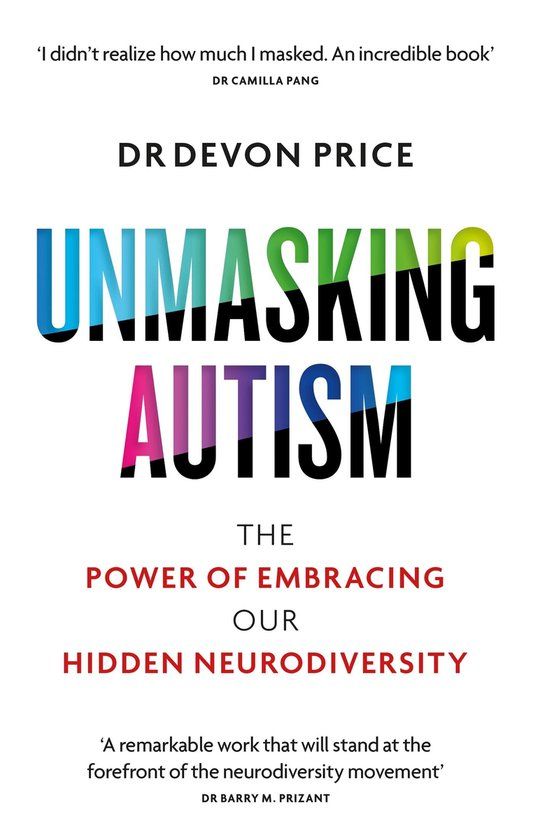
A groundbreaking new work on understanding ‘masked Autism’ and the power of embracing neurodiversity for both individuals and society.
OVER 250,000 COPIES SOLD AROUND THE WORLD
‘Outstanding.” -Fern Brady, author of Strong Female Character
‘Reading this felt like being at home – I didn’t realise how much I masked. What an incredible book that I know will be re-read many times over.’ – Dr Camilla Pang, author of Explaining Humans
‘A remarkable work that will stand at the forefront of the neurodiversity movement.’ – Dr Barry M. Prizant, author of Uniquely Human
‘A powerful argument for radical self-acceptance applicable to all readers.’ – Los Angeles Times
‘An essential roadmap for autistic people to be themselves.’ – NPR
Have you, a friend or family member been living with undiagnosed autism?
For every visibly Autistic person you meet, there are countless ‘masked’ people who pass as neurotypical. They don’t fit the stereotypical mould of Autism and are often forced by necessity to mask who they are, spending their entire lives trying to hide their Autistic traits. In particular, there is evidence that Autism remains significantly undiagnosed in women, people of colour, trans and gender non-conforming people, many of whom are only now starting to recognise those traits later in life.
Blending cutting-edge research, personal insights and practical exercises for self-expression, Dr Devon Price examines the phenomenon of ‘masking’, making a passionate argument for radical authenticity and non-conformity. A powerful call for change, Unmasking Autism gifts its readers with the tools to uncover their true selves and build a new society – one where everyone can thrive on their own terms.

A new way to take control of all kinds of stress from the international bestselling author Mo Gawdat and stress-management specialist Alice Law.
The Sunday Times bestseller
‘This might be the most useful book I’ve ever read . . . it’s so good!’ – Chris Evans
From the author of Scary Smart, Unstressable applies Mo Gawdat’s brilliant engineering mind and Alice Law’s stress-management expertise to the ‘stress pandemic’.
This follow-up to the bestselling Solve For Happy will show you that chronic stress is not an unavoidable part of modern life, but a predictable – and therefore preventable – response, often as much to do with negative thought patterns as external circumstances.
Mo explains how he made it through the most acutely stressful times in his own life, and touches on the idea of post-traumatic growth – both on a personal level and in response to huge events that affected all of us, such as the COVID pandemic and subsequent economic turmoil.
Practical exercises will help you build up the skills to manage stress no matter your circumstances, backed up by neuroscience and accessible psychology.
‘Everything he writes is an enlightening education in how to be human.’ – Elizabeth Day, author of How to Fail

This journal takes the reader from the coasts and interiors of South America to the South Sea Islands. It displays Darwin’s speculative mind at work, posing searching questions about the complex relations between the Earth’s structure, animal forms, anthropology and the origins of life itself.
With an Introduction by David Amigoni.
Charles Darwin’s travels around the world as an independent naturalist on HMS Beagle between 1831 and 1836 impressed upon him a sense of the natural world’s beauty and sublimity which language could barely capture. Words, he said, were inadequate to convey to those who have not visited the inter-tropical regions, the sensation of delight which the mind experiences’.
Yet in a travel journal which takes the reader from the coasts and interiors of South America to South Sea Islands, Darwin’s descriptive powers are constantly challenged, but never once overcome. In addition, The Voyage of the Beagle displays Darwin’s powerful, speculative mind at work, posing searching questions about the complex relation between the Earth’s structure, animal forms, anthropology and the origins of life itself.

A collection of sexual fantasies from women around the world, Want is a revelatory, sensational and game-changing exploration of women’s sexuality that asks, and answers: How do women feel about sex when they have the freedom to be totally anonymous?
**PREORDER THE BRAND NEW COLLECTION MORE NOW**
THE INSTANT NO. 1 SUNDAY TIMES HARDBACK BESTSELLER
THE TOP 10 SUNDAY TIMES PAPERBACK BESTSELLER FOR OVER 20 WEEKS
What do you want when no one is watching?
What do you want, when the lights are off?
What do you want, when you are anonymous?
‘Want makes for addictive reading . . . compelling’ Guardian
‘I just loved reading it. It’s exceptional’ Fearne Cotton, Happy Place
‘An empowering project’ Stylist
‘Extremely sexy . . . Want is the horny manifesto your TBR list will thank you for’ Cosmopolitan
In this groundbreaking book, Gillian Anderson collects and introduces the anonymous sexual fantasies of women from around the world (along with her own anonymous submission). They are all extraordinary: full of desire, fear, intimacy, shame, satisfaction and, ultimately, liberation. From dreaming about someone off-limits to conjuring a scene with multiple partners, from sex that is gentle and tender to passionate and playful, from women who have never had sex to women who have had more sex than they can remember, these fantasies provide a window into the most secret part of our minds.
Want reveals how women feel about sex when they have the freedom to be totally themselves.

Anton de Kom’s We Slaves of Suriname is a literary masterpiece as well as a fierce indictment of racism and colonialism. In this classic book, published here in English for the first time, the Surinamese writer and resistance leader recounts the history of his homeland, from the first settlements by Europeans in search of gold through the era of the slave trade and the period of Dutch colonial rule, when the old slave mentality persisted, long after slavery had been formally abolished.
159 years after the abolition of slavery in Suriname and 88 years after its initial publication, We Slaves of Suriname has lost none of its brilliance and power.

With wit, colour and clarity, What A Wonderful World quickly and painlessly brings us up to speed on how the world of the 21st century works.
With wit, colour and clarity, What A Wonderful World quickly and painlessly brings us up to speed on how the world of the 21st century works. From economics to physics and biology to philosophy, Marcus Chown explains the complex forces that shape our universe.
Why do we breathe? What is money? How does the brain work? Why did life invent sex? Does time really exist? How does capitalism work – or not, as the case may be? Where do mountains come from? How do computers work? How did humans get to dominate the Earth? Why is there something rather than nothing?
In What a Wonderful World, Marcus Chown, bestselling author of Quantum Theory Cannot Hurt You and the Solar System app, uses his vast scientific knowledge and deep understanding of extremely complex processes to answer simple questions about the workings of our everyday lives. Lucid, witty and hugely entertaining, it explains the basics of our essential existence, stopping along the way to show us why the Atlantic is widening by a thumbs’ length each year, how money permits trade to time travel why the crucial advantage humans had over Neanderthals was sewing and why we are all living in a giant hologram.